
Pure History
A celebration of true craftsmanship. Every antique racket is a work of art — shaped by hand, defined by wood, and marked by time.
The makers behind these pieces combined precision and passion, creating objects that were never meant to last this long, yet still speak to us today. Their work represents not only the beginnings of the game, but also the artistry that made tennis history tangible.






The Handles
In early racket making, the handle was more than a practical element — it defined the character of the racket.
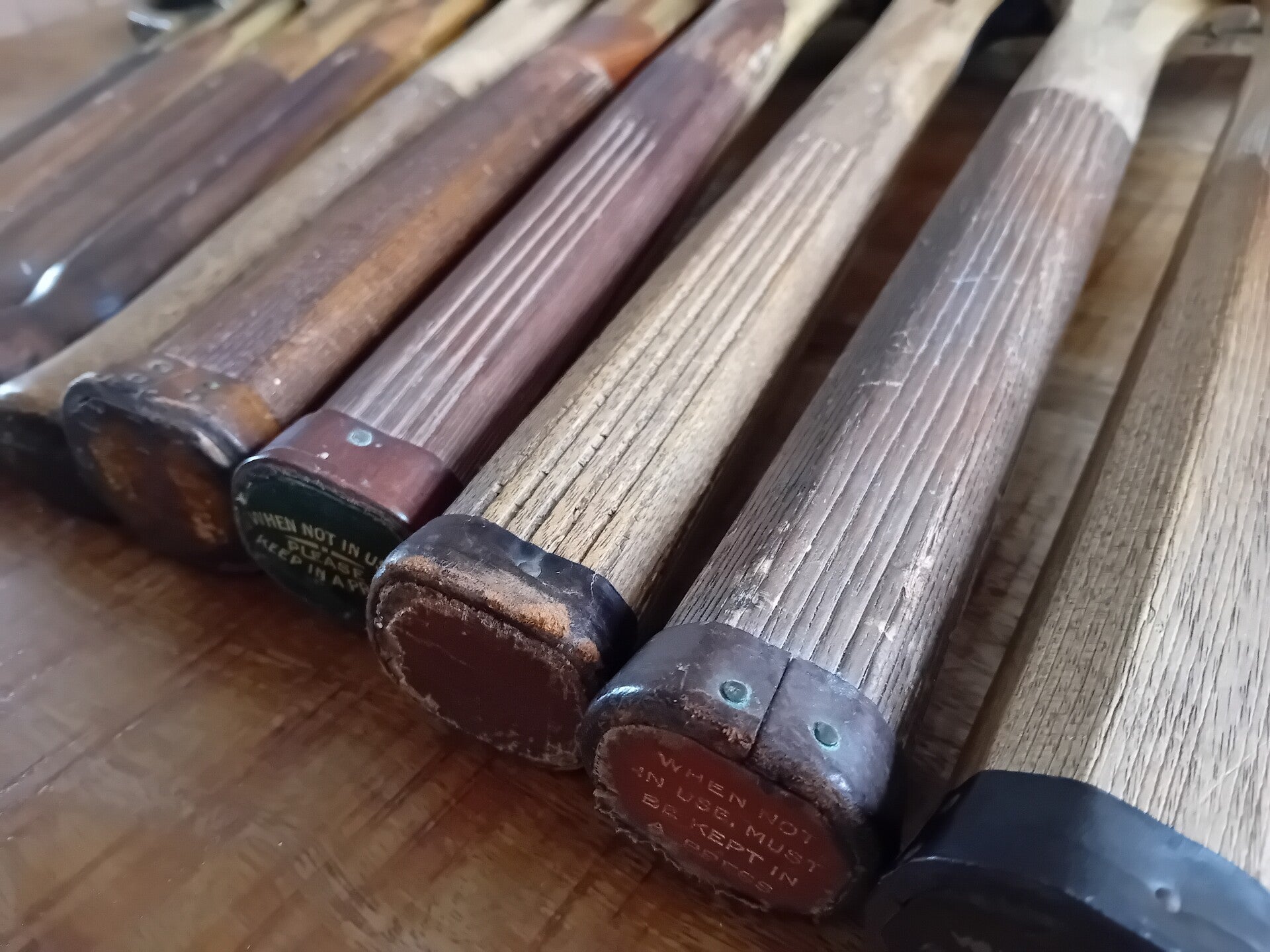
Makers experimented with shapes and finishes to improve comfort, control, and balance. Among the most distinctive are the rounded Ayres handles, known for their refined finish and smooth feel. The fishtail and fantail designs reflect a time of bold craftsmanship, each form offering a distinct feel in the hand. Some rackets feature grooved handles, carved directly into the wood to enhance grip without any covering material.
Together, these variations reveal how subtle design choices shaped the evolution of the tennis racket handle — and with it, the history of the game itself.


The Butcaps
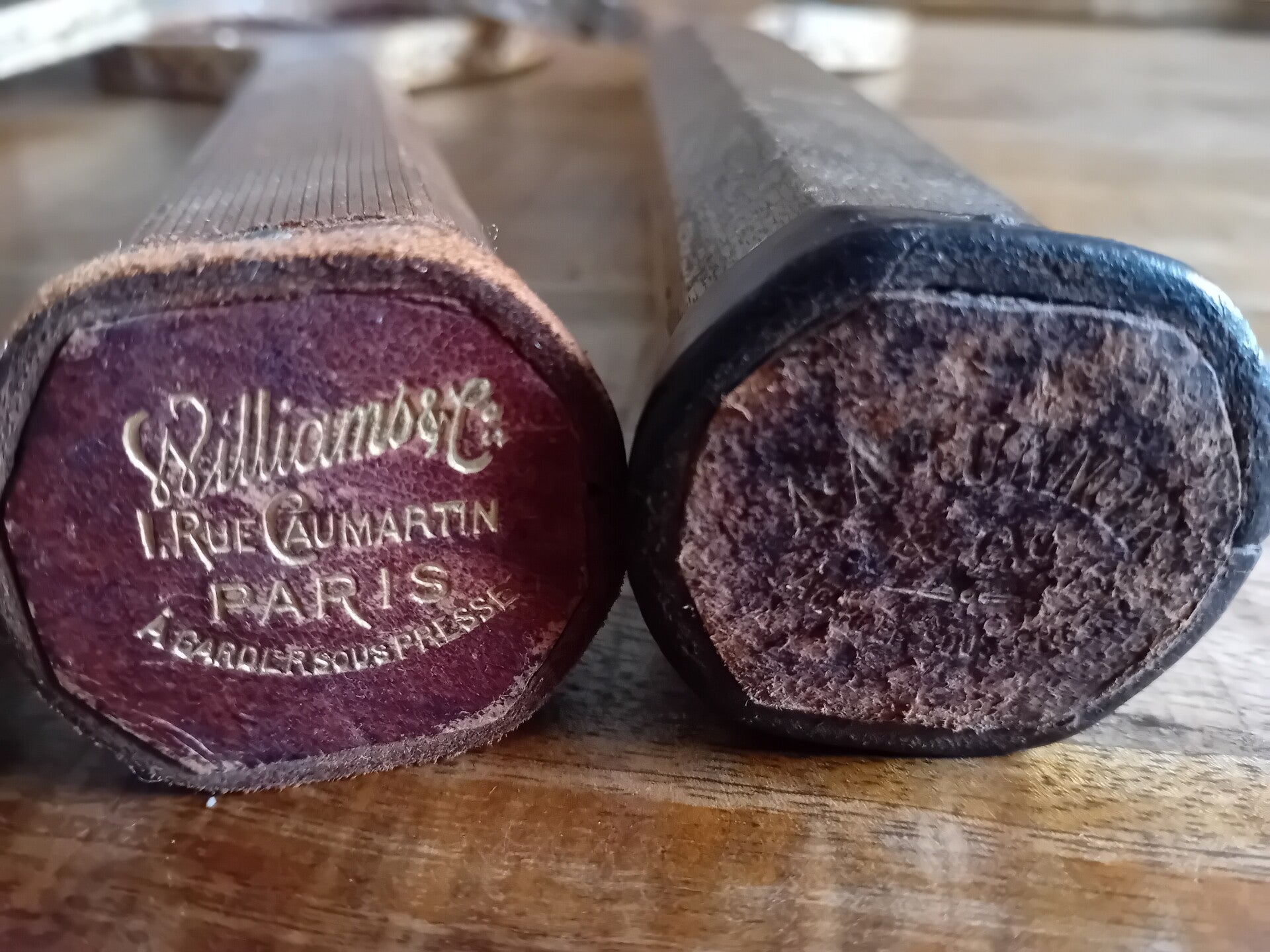
Many early rackets were protected by butcaps — small end caps designed to shield the frame from damage. They often carry the instruction “when not in use, keep in press”, a reminder of the careful maintenance practices of the time. Some also feature the maker’s logo, serving as both a mark of craftsmanship and a subtle branding element.
These small details highlight the practical care and pride that went into early tennis equipment, and add character to each antique racket.



The Strings
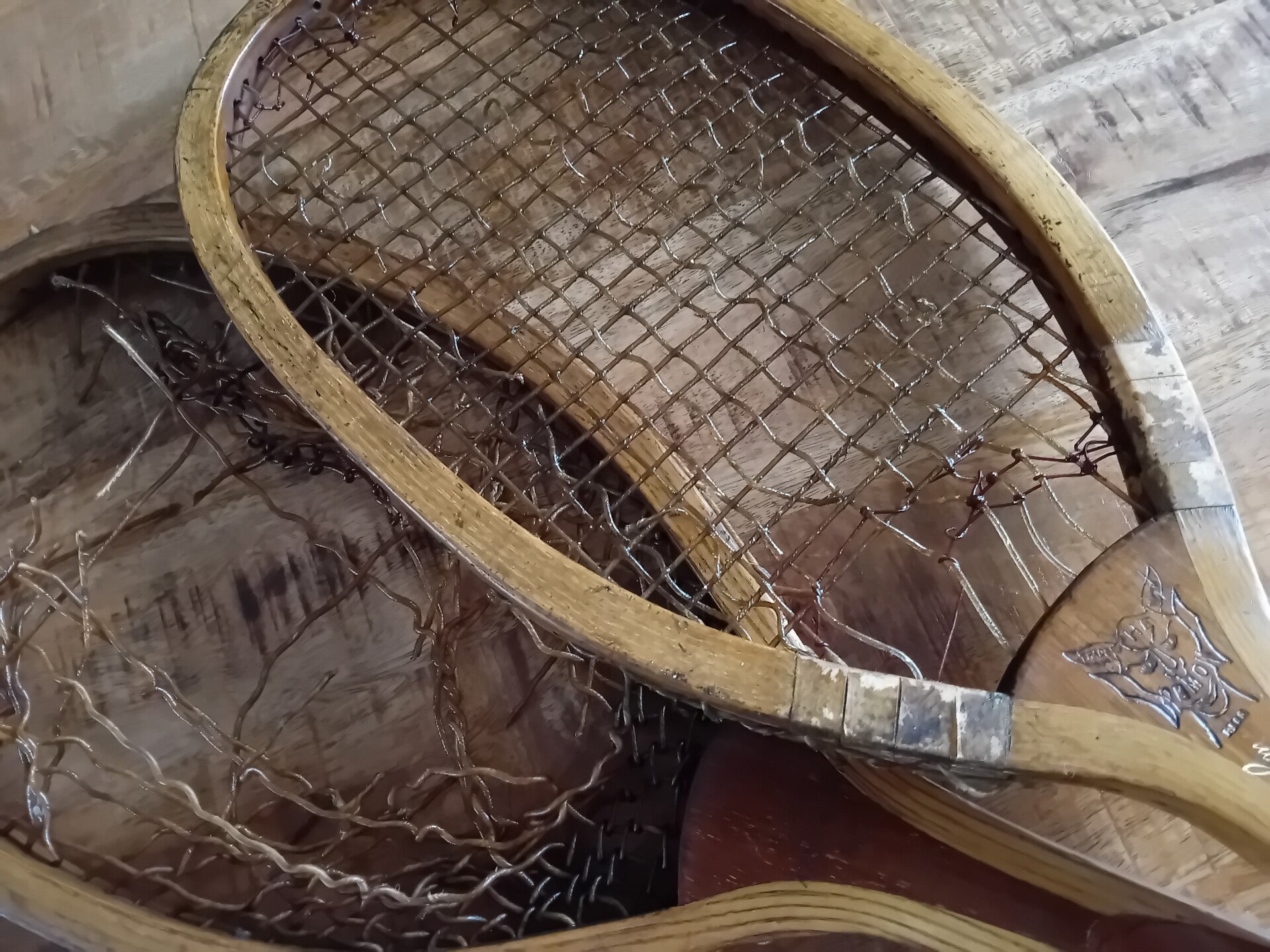
Early tennis rackets were strung with natural gut, usually sourced from cow or sheep intestines, prized for their resilience and elasticity. The strings were often dyed or stained, either to improve durability or simply for aesthetic effect. The tension and pattern greatly influenced play, and skilled stringing was considered an art in itself. Most rackets show dense stringing, often with some double mains in the center — reflecting the innovations of the maker looking for ways to distinguish themselves.
Even small differences in string layout, tension, and treatment reveal the evolution of tennis equipment and the care that went into antique rackets.


Brands and Commerce
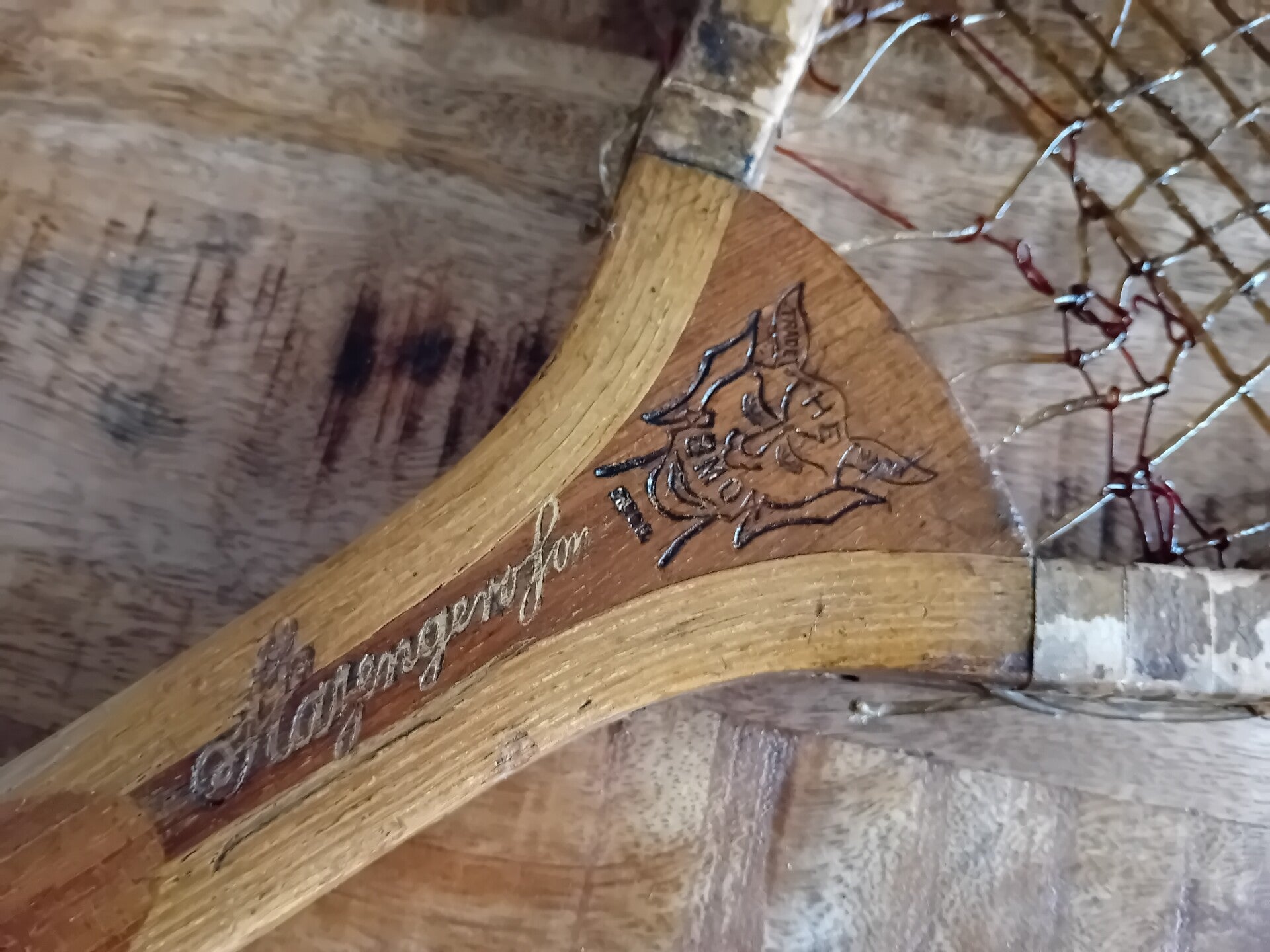
Early tennis equipment was not only crafted with care, but also carefully branded and marketed. Firms like Slazengers, Williams & Co., Ayres, and others established reputations for quality, influencing both players and collectors. Maker’s logos on handles, butcaps, or frames served as a mark of authenticity and prestige. Distribution was limited to specialized shops or sports clubs, making each racket a tangible symbol of both craftsmanship and commerce. These details remind us that the history of tennis is as much about the makers and the market as it is about the game itself.

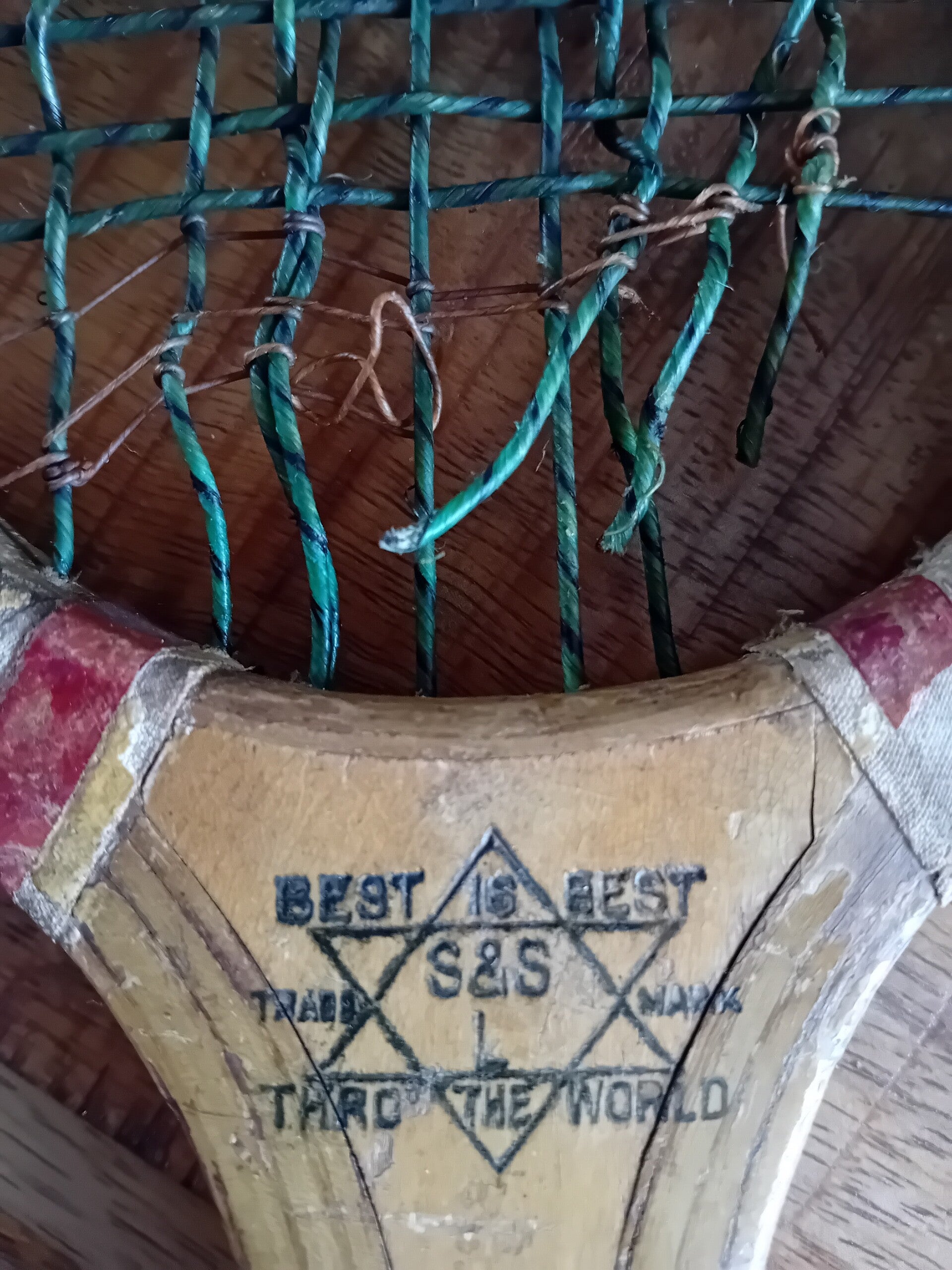


Every Detail
Every detail shown here carries its own piece of history — shaped by skilled hands, guided by patience, and built in a time when craft defined quality. From the early experiments in handle design to the careful stringing of natural gut, each element reflects both innovation and tradition.
Together they form a quiet tribute to the makers who turned simple materials into lasting works of art — and to the game that continues to honour their legacy.
Maak jouw eigen website met JouwWeb